Watch The Iceman Online
- Posted in:
- 17/09/17
- 96
History. Humans have marked their bodies with tattoos for thousands of years. These permanent designs—sometimes plain, sometimes elaborate, always personal—have served as amulets, status symbols, declarations of love, signs of religious beliefs, adornments and even forms of punishment. Joann Fletcher, research fellow in the department of archaeology at the University of York in Britain, describes the history of tattoos and their cultural significance to people around the world, from the famous " Iceman," a 5,2. Maori. What is the earliest evidence of tattoos? In terms of tattoos on actual bodies, the earliest known examples were for a long time Egyptian and were present on several female mummies dated to c.
B. C. But following the more recent discovery of the Iceman from the area of the Italian- Austrian border in 1. Can you describe the tattoos on the Iceman and their significance? Following discussions with my colleague Professor Don Brothwell of the University of York, one of the specialists who examined him, the distribution of the tattooed dots and small crosses on his lower spine and right knee and ankle joints correspond to areas of strain- induced degeneration, with the suggestion that they may have been applied to alleviate joint pain and were therefore essentially therapeutic.
This would also explain their somewhat 'random' distribution in areas of the body which would not have been that easy to display had they been applied as a form of status marker. What is the evidence that ancient Egyptians had tattoos? There's certainly evidence that women had tattoos on their bodies and limbs from figurines c. B. C. to occasional female figures represented in tomb scenes c. B. C. and in figurine form c.
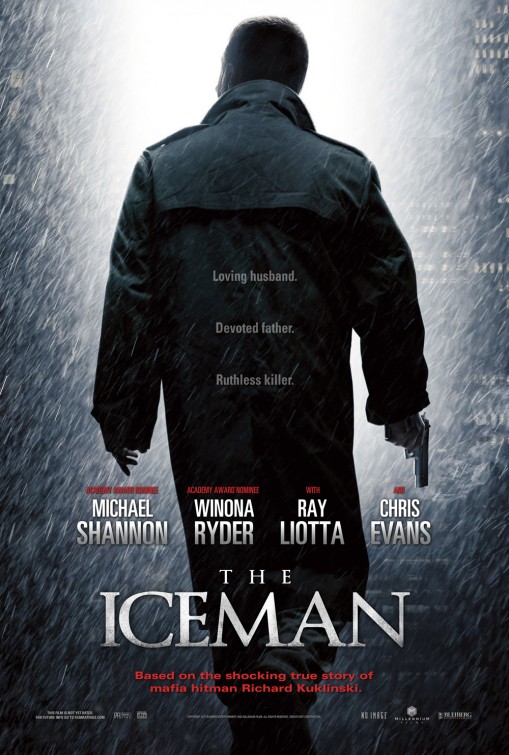
- You can watch NCIS online for free on this page by streaming the movie in the video player above or by choosing a different version to play below it.
- What is the earliest evidence of tattoos? In terms of tattoos on actual bodies, the earliest known examples were for a long time Egyptian and were present on several.
B. C., all with tattoos on their thighs. Also small bronze implements identified as tattooing tools were discovered at the town site of Gurob in northern Egypt and dated to c. B. C. And then, of course, there are the mummies with tattoos, from the three women already mentioned and dated to c.
A prehistoric Neanderthal man found frozen in ice is revived by an arctic exploration team, who then attempt to use him for their own scientific means. ICEMAN MURDER MYSTERY. NARRATOR: Frozen for more than 5,000 years, on a remote mountain pass, and now, preserved for the ages in a refrigerated tomb; he is the Iceman. In the documentary Miss Representation, Jennifer Newsom exposes the bold reality of western culture and our continuous idea that a woman’s ability to hold positions.
B. C. to several later examples of female mummies with these forms of permanent marks found in Greco- Roman burials at Akhmim. What function did these tattoos serve? Who got them and why?
Because this seemed to be an exclusively female practice in ancient Egypt, mummies found with tattoos were usually dismissed by the (male) excavators who seemed to assume the women were of "dubious status," described in some cases as "dancing girls." The female mummies had nevertheless been buried at Deir el- Bahari (opposite modern Luxor) in an area associated with royal and elite burials, and we know that at least one of the women described as "probably a royal concubine" was actually a high- status priestess named Amunet, as revealed by her funerary inscriptions. And although it has long been assumed that such tattoos were the mark of prostitutes or were meant to protect the women against sexually transmitted diseases, I personally believe that the tattooing of ancient Egyptian women had a therapeutic role and functioned as a permanent form of amulet during the very difficult time of pregnancy and birth. This is supported by the pattern of distribution, largely around the abdomen, on top of the thighs and the breasts, and would also explain the specific types of designs, in particular the net- like distribution of dots applied over the abdomen. During pregnancy, this specific pattern would expand in a protective fashion in the same way bead nets were placed over wrapped mummies to protect them and "keep everything in." The placing of small figures of the household deity Bes at the tops of their thighs would again suggest the use of tattoos as a means of safeguarding the actual birth, since Bes was the protector of women in labor, and his position at the tops of the thighs a suitable location. This would ultimately explain tattoos as a purely female custom. Who made the tattoos? Although we have no explicit written evidence in the case of ancient Egypt, it may well be that the older women of a community would create the tattoos for the younger women, as happened in 1.
Egypt and happens in some parts of the world today. What instruments did they use? It is possible that an implement best described as a sharp point set in a wooden handle, dated to c. B. C. and discovered by archaeologist W. M. F. Petrie at the site of Abydos may have been used to create tattoos. Petrie also found the aforementioned set of small bronze instruments c.
B. C.—resembling wide, flattened needles—at the ancient town site of Gurob. If tied together in a bunch, they would provide repeated patterns of multiple dots. These instruments are also remarkably similar to much later tattooing implements used in 1. Egypt. The English writer William Lane (1. It is generally performed at the age of about 5 or 6 years, and by gipsy- women.”What did these tattoos look like?
Most examples on mummies are largely dotted patterns of lines and diamond patterns, while figurines sometimes feature more naturalistic images. The tattoos occasionally found in tomb scenes and on small female figurines which form part of cosmetic items also have small figures of the dwarf god Bes on the thigh area. What were they made of? How many colors were used? Usually a dark or black pigment such as soot was introduced into the pricked skin. Watch Out Of The Ashes Putlocker there. It seems that brighter colors were largely used in other ancient cultures, such as the Inuit who are believed to have used a yellow color along with the more usual darker pigments.
What has surprised you the most about ancient Egyptian tattooing? That it appears to have been restricted to women during the purely dynastic period, i. Watch Love Online (2017).
B. C. Also the way in which some of the designs can be seen to be very well placed, once it is accepted they were used as a means of safeguarding women during pregnancy and birth. Can you describe the tattoos used in other ancient cultures and how they differ?
Among the numerous ancient cultures who appear to have used tattooing as a permanent form of body adornment, the Nubians to the south of Egypt are known to have used tattoos. The mummified remains of women of the indigenous C- group culture found in cemeteries near Kubban c.
B. C. were found to have blue tattoos, which in at least one case featured the same arrangement of dots across the abdomen noted on the aforementioned female mummies from Deir el- Bahari. The ancient Egyptians also represented the male leaders of the Libyan neighbors c. B. C. with clear, rather geometrical tattoo marks on their arms and legs and portrayed them in Egyptian tomb, temple and palace scenes.
The Scythian Pazyryk of the Altai Mountain region were another ancient culture which employed tattoos. In 1. 94. 8, the 2,4. Scythian male was discovered preserved in ice in Siberia, his limbs and torso covered in ornate tattoos of mythical animals. Then, in 1. 99. 3, a woman with tattoos, again of mythical creatures on her shoulders, wrists and thumb and of similar date, was found in a tomb in Altai. The practice is also confirmed by the Greek writer Herodotus c.
B. C., who stated that amongst the Scythians and Thracians "tattoos were a mark of nobility, and not to have them was testimony of low birth.”Accounts of the ancient Britons likewise suggest they too were tattooed as a mark of high status, and with "divers shapes of beasts" tattooed on their bodies, the Romans named one northern tribe "Picti," literally "the painted people."Yet amongst the Greeks and Romans, the use of tattoos or "stigmata" as they were then called, seems to have been largely used as a means to mark someone as "belonging" either to a religious sect or to an owner in the case of slaves or even as a punitive measure to mark them as criminals. It is therefore quite intriguing that during Ptolemaic times when a dynasty of Macedonian Greek monarchs ruled Egypt, the pharaoh himself, Ptolemy IV (2.
Marvel's Iceman Series Is Everything I Love and Hate About Coming Out Stories. It’s been interesting to watch Bobby Drake unsteadily make his way through life as a newly- out gay man in Sina Grace’s Iceman series. He’s very much the same Iceman who’s been cracking wise with the X- Men since the ’6. Bobby who’s grappling with a new sort of emotional struggle. Though Bobby’s told a number of people throughout Marvel’s books about his sexuality, his coming out—like most people’s—has been a gradual process. The more comfortable he has become with acknowledging and accepting his identity, the more open he’s become with others. But, for all of the personal growth that Bobby’s gone through as a result of his being honest with his loved ones, the specter of coming out to his parents has been lurking around the periphery of Iceman since its very first issue.
In no uncertain terms, Iceman has framed Bobby’s fear of rejection by his family as the first big bad of the series and, this week, Bobby’s facing his demons head on. The circumstances leading to Bobby’s coming out are a bit convoluted, but understanding them is key to understanding the ways in which Iceman’s story is both significant and at times deeply disappointing. In 2. 01. 2's All- New X- Men #1, the adult Beast of the present day travels into the past to recruit the original five X- Men on a mission to stop adult Cyclops. As these young X- Men come to grips with seeing how their future selves’ lives played out, young Jean Grey (who’s new to her telepathy) inadvertently reads young Bobby’s mind and discovers that he’s been living in the closet. Over the course of the series, Bobby gradually warms to the future and the idea of living openly as a gay teenager in an age where his queerness doesn’t necessarily carry the same kind of burdens it did back in his original time.
Eventually, young Bobby confronts his older self about their lives and older Bobby tearfully admits that he’s gay as well and that he’s proud of his younger self for being so mature for his age. Since then, young Bobby’s been off doing the sort of thing that super kids do—galavanting with his fellow X- Teens and dating a flaky Inhuman named Romeo. Older Bobby, by comparison, has been trying to successfully embody a new identity for himself while also maintaining all of the others that’ve come along with adulthood. There’s always been Bobby the teacher and Bobby the X- Man. Now there’s Bobby the gay man, and it’s this newest self that Iceman has struggled to define in a way that’s felt meaningful. Bobby often says and does simple things that let you know he’s gay—he’s on Marvel’s answer to Grindr and he’s flirted with Wolverine’s son Daken—and yet the things that define Bobby’s queer identity have always felt rather nebulous save for his coming out- related anxiety.
We know that Bobby’s gay because of the things that he says, but not exactly because of the things he does. It’s been more telling than showing. To be fair, this is one of the most difficult things about bringing a character’s queerness to the surface in any story: getting past the flat statement of identity and into a space where the elements of their personality begin to shape their queerness into something unique. But that’s exactly what a series like Iceman should be chiefly concerned with, considering how prominent a queer character like Iceman is for Marvel as a publisher. For all of the buildup to Bobby’s coming out, the actual scene of him coming out to his parents is rather humdrum, which is both a good and a bad thing. Bobby straight- up tells his folks that he’s gay and they’re..
In a lot of ways, it’s a familiar, if somewhat darker, riff on Bobby’s original “coming out” as a mutant scene in Bryan Singer’s X2: X- Men United. It’s exactly the kind of reaction that so many of us are familiar with, not exactly because they’re reflective of our own experiences, but because it’s a fairly textbook sort of coming out that’s rather overdone across the majority of queer media.
In almost every LGBTQ- focused YA novel, television show, and movie, there’s the dreaded coming- out scene involving lots of tears and high- strung emotions. Doors may be slammed, voices may be raised, and there’s a very solid chance that at least one person will storm out of a room. These scenes are both very much grounded in reality and, in an undeniable way, contain some of the most narratively uninteresting parts of queer media. Often times, they prioritize telling a story that’s sort of universally relatable rather than creatively unique. Everyone’s coming out story is different, but the way that we as a culture tell coming out stories tends to be rather uniform.
That doesn’t have to be a case—especially in a book like Iceman that’s so chock full of potential. Bobby’s parents immediately fly into an argument, blaming one another for which of them made Bobby gay. They then direct their anger at Bobby himself, confronting him about his past girlfriends. Bobby tries to reason with them that none of his other relationships have worked out specifically because he’s never been straight and, of course, his parents refuse to listen.
On some level, this fight gestures at the idea that, deep down, the Drakes must acknowledge that they’ve never really known their son’s true self. Fearing this new Bobby, they’re desperately grasping for older versions of him that they thought they understood. Watch The Spirit Of `45 Online Goodvideohost. But the weird thing about the newest issue of Iceman is the fact that there’s literally a version of Bobby from the past who’s conspicuously missing from this entire ordeal. Older Bobby doesn’t try at all to involve his younger self in his coming out, and that feels like an odd decision, given the truly novel situation that the two Icemen are in. There are all sorts of things about the Bobbys’ relationship to one another that have yet to be unpacked in a meaningful way. This lack of interaction makes it feel like something crucial is missing from Iceman.
Older Bobby’s spent years repressing who he is and younger Bobby’s coming rather recently from a point in time where he couldn’t have dreamed of coming out. They are the same person and yet they are fundamentally different from each other. Everyone’s coming out story is different, but the way that we as a culture tell coming out stories tends to be rather uniform. Coming out as a teen has changed young Bobby’s life for the better, in ways that are different from how coming out later in life has helped older Bobby. But, between the two of them, the common denominator is that accepting their queerness has made them both stronger, better people. That’s exactly the sort of idea that any queer person in Bobby’s position could express to his parents, but Iceman instead choses to go a more familiar route. Forever the man being interrupted, Bobby skates off to deal with a sudden attack from the Juggernaut in this week’s issue #5.
It’s during that fight that Grace briefly gives us a peek at what Iceman could still end up becoming as it fully settles into its voice. As Iceman and Juggernaut go back and forth and trade blows, Bobby channels the frustration he feels towards his parents into a power that demonstrates just how much he’s grown as a person. He’s able to summon and control a gang of moving ice golems effortlessly and his static ice constructs are both complex and expertly deployed. Older Bobby’s exercising a command of his powers that’s only been hinted at before and Grace hits the nail on the head when Juggernaut literally crushes Iceman’s body into a fine powder, seemingly killing him. Almost immediately, though, Iceman literally pulls himself together from his vaporized form, complete with a set of ice wings, and promptly tosses Juggs off into the distance as if he’s nothing. The pressure, buildup, and release of Bobby’s emotions are all captured on a single page that pushes the character into a new place that marks a change for him.